
Filling is an effective method for treating dental caries. A successful treatment can halt the progression of cavities and restore the tooth’s shape and function. However, improper handling may not only fail to achieve the treatment goals but also lead to postoperative complications or the development of secondary caries.
To address the issue of failed dental fillings, in addition to technical expertise, the choice of filling material is also crucial. When selecting filling materials, inlays can be considered for restoration.
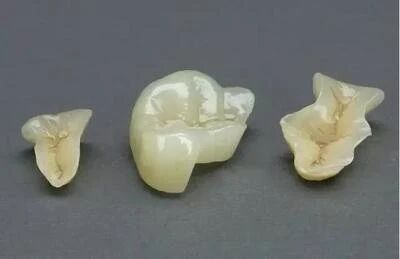
What is a porcelain inlay?
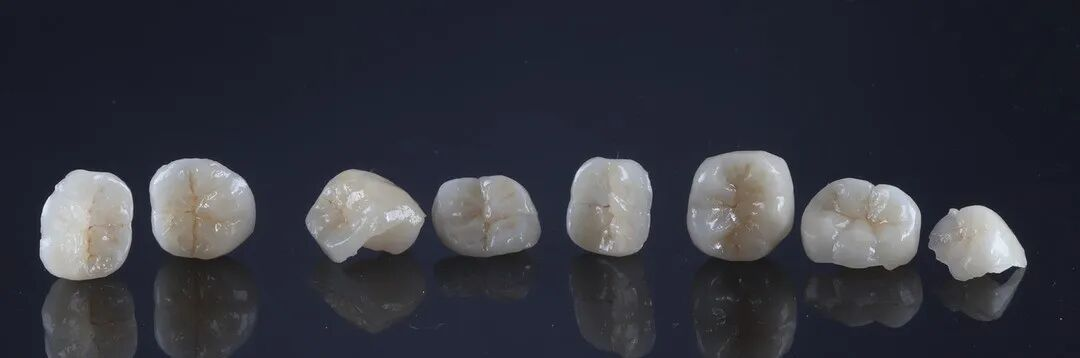
A porcelain inlay is a type of dental restoration embedded into the cavity of a tooth to restore its shape and function. Custom-made for the patient’s tooth, the porcelain inlay is bonded to the damaged tooth using dental adhesive. Due to its precise fit in terms of shape, hardness, and other aspects, it not only addresses the issue of further enlargement of the missing tooth part but also reduces the need for frequent fillings, alleviating the patient’s discomfort.
Advantages of Porcelain Inlay Restoration:
1. **Superior marginal fit**: The entire fabrication process of an inlay avoids any operational interference inside the oral cavity, allowing for a more precise construction compared to traditional dental fillings.
2. **Better restoration of natural tooth morphology**: As the fabrication is completed outside the mouth, it effectively restores the original shape of the tooth and its chewing efficiency.
3. **Excellent bio-compatibility and aesthetic results**: This is a characteristic of all-ceramic materials, eliminating concerns about metal allergies. The aesthetic properties of ceramics are well-known and deliver highly noticeable aesthetic outcomes.
4. **High corrosion resistance and wear resistance**: Ceramics can endure for thousands of years without corrosion, making porcelain inlays free from corrosion issues.
5.**Highly polished proximal surfaces for optimal contact relationships**: This not only prevents plaque accumulation but also protects weak cusps and cracks in the tooth, reducing the risk of cusp fracture and tooth splitting.
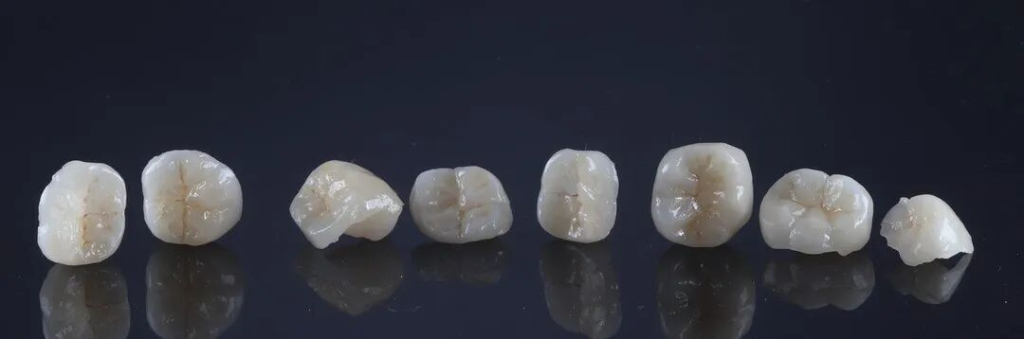
Indications for Porcelain Inlays
Indications for Inlays:
1. Loss of one functional cusp.
2. Shallow (thin) defects with moderate to large extent.
3. Defect area covering approximately 1/2 to 4/5 of the occlusal surface.
4. As retainers for inlay bridges—not recommended.
5. Abutment teeth with vital pulp.
Indications for Onlays:
1. Patients with excessive wear on the occlusal surface of posterior teeth.
2. Cases where a large area of the posterior tooth crown is defective and has undergone complete endodontic or root canal treatment.
3. Fractured buccal or lingual cusps in posterior teeth.
4. Teeth with occlusal surface cracks (hidden fractures).
5. Cases where poor proximal contact or severe food impaction requires restoration of adjacent tooth relationships.
6. Posterior teeth with enamel hypoplasia affecting function.
Advantages of Porcelain Inlays:
**Precautions for Inlay and Onlay Restorations:**
1. **Tooth Preparation**
Inlay and onlay preparations are relatively straightforward, requiring only the avoidance of undercuts.
2. **Impression**
Supragingival margins simplify impression-taking, ensuring clearer and more accurate impressions.
3. **Fit**
Precise impressions result in restorations with superior marginal adaptation.
4. **Margins**
Marginal fit can be thoroughly inspected, and edges are highly polished after cementation.
5. **Periodontal Considerations**
Supragingival margins reduce the risk of violating biological width, ensuring predictable long-term outcomes.
6. **Minimally Invasive Approach**
Maximizes preservation of healthy tooth structure, aligning with minimally invasive principles.